Airports have always collected data. Flight data. Resource data. Passenger data. The problem has never been a shortage of data. It has been a shortage of meaning.
Consider this: a mid-sized shopping centre knows which display stops a customer, which aisle creates a bottleneck, which promotional placement converts and which merely decorates. It knows this because it watches, continuously, with intelligence behind the lens.
Most airports do not. They process tens of thousands of passengers through a tightly sequenced, time-pressured journey with less real-time behavioural insight than a retail unit a fraction of their size.
That gap is closing. The latest generation of AI video intelligence is changing what it means to observe an airport in operation, not just record it, but understand it. In plain language. In real time. Across every node of the passenger and turnaround journey.
From Recording to Understanding
Traditional CCTV infrastructure has existed in airports for decades. It records. It archives. It supports post-incident investigation. What it has never done, until now, is think.
This new generation of AI video intelligence does not simply detect motion or count heads. It understands context. It knows the difference between a vehicle actively unloading and one that has finished and is blocking the kerb. It understands that a passenger who has been standing at a self-service kiosk for 90 seconds with repeated screen taps and a step back is experiencing a failure, not completing a transaction. It recognises that a queue whose length is stable but whose growth rate is accelerating is about to break.
This is the shift: from reporting what happened, to understanding what is happening, and anticipating what will happen next.
The airport that finally knows what its passengers are experiencing, in real time, across every node from kerbside arrival to gate departure, has a fundamentally different operational capability to one that does not.
The Seven Nodes Where It Changes Operations
The passenger journey through a terminal has seven distinct operational nodes. Each has different problems. Each has a different commercial and operational case for AI video intelligence deployment.
1. Kerbside and Landside
The kerbside is the airport’s first impression and its most chaotic edge. Traditional management here is almost entirely reactive: a marshal notices a jam and redirects manually. There is no prediction, no flow intelligence.
AI video intelligence changes this by monitoring bay occupancy in real time, detecting vehicles that have finished unloading but continue to block space, predicting demand surges 20 to 30 minutes ahead by correlating inbound passenger flows with departure schedules, and flagging pedestrian-vehicle conflict zones before incidents occur.
Example: The system identifies three ride-share vehicles whose passengers have not yet emerged from the terminal exit. Alert to marshals: Zone D upper kerb, three vehicles with dwell over six minutes, passengers not yet at the exit. Likely app-hailed pickups in the drop-off zone. Recommend redirection to the ride-share holding area.
2. Check-In Hall
The check-in hall is operationally the most staff-intensive node in the terminal. AI video intelligence brings queue intelligence that goes far beyond headcounts.
- Live queue length per desk and per zone, in passengers, not metres, updated continuously
- Queue abandonment detection and analysis, a metric that simply does not exist today in most airports
- Kiosk failure detection when a passenger shows repeated tapping and step-back behaviour before staff notice anything is wrong
- At-risk passenger identification for those running with luggage or displaying tight-connection urgency, cross-referenced with flight data to trigger a proactive priority lane recommendation
3. Bag Drop
Automated bag drop units fail silently. They confuse passengers. They generate agent interventions at a rate that often makes them slower than staffed desks. This is almost never measured directly.
The system maps each bag drop interaction at the level of individual steps, identifies precisely where in the process failures occur, and alerts an agent proactively when a passenger has been at a unit for more than 90 seconds without progressing. The result is intervention before frustration, not after.
4. Security Checkpoint
Security is where the airport’s safety mandate and the passenger experience mandate collide most directly. It is also the node with the largest untapped commercial implication: every minute of unnecessary friction here is a minute of retail dwell time lost.
The defining capability at security is pre-screening observation. The system watches what is happening in the queue before passengers reach the belt. It detects laptops not yet removed. Liquids in outer pockets. Heavy outerwear. It generates a targeted intervention, a PA prompt, a digital signage trigger, a staff alert, for a specific cluster of unprepared passengers 90 seconds before they reach the scanner.
Every 1-minute reduction in average security processing time across a 12-lane checkpoint, sustained across an operating day, adds approximately 8 to 12 minutes of additional retail dwell per passenger. At a major hub, this is worth millions annually.
5. Passport Control and Border
This approach does not interact with identity verification or immigration assessment. Its role here is pure flow intelligence: understanding what is coming before it arrives.
By tracking passenger pace and volume through the post-security corridor, cross-referenced with flight arrival data, the system provides 8 to 15 minutes of advance notice before a surge reaches the border hall. Lane opening recommendations arrive with specific timing and volume rationale, not guesswork.
Three flights landed within 20 minutes. With AI surge prediction, four additional lanes opened 11 minutes before the arrival. Average wait time: 7 minutes. Without it, based on historical response patterns, the estimate was 31 minutes.
6. Retail and Duty Free
Non-aeronautical revenue represents 50 to 60 per cent of total airport revenue at most major hubs. Despite this, most airports manage their retail environment with less behavioural intelligence than a high street chain store.
AI video intelligence captures the full retail funnel: exposure, attention, consideration, and conversion. Not just the first and last. This produces insights that no transactional system can generate.
- Flow path analysis showing where passengers actually go, not where the floor plan intends them to go
- Engagement funnel measurement from window attention rate to hands-on product engagement to purchase
- Till queue abandonment detection, quantifying revenue lost to queue friction at the final step
- Time-to-gate commercial intelligence, identifying passengers with dwell time remaining versus those who are boarding-pressured
For a hub airport processing 40 million passengers annually: a 3-minute increase in retail dwell time per passenger is worth USD 15 to 25 million in incremental non-aeronautical revenue.
7. Gate Area
The gate area is where the airport’s experience ends and the airline’s journey begins. It is also where welfare events are most likely, where boarding processes fall apart, and where communication failures become delays.
AI video intelligence brings proactive intelligence to the final mile: boarding group compliance monitoring, real-time completion rate with a prediction of whether the aircraft will push back on time, passenger welfare detection for those displaying distress or medical indicators, and gate change response analysis to identify passengers who have not responded to an announcement before it becomes a delay.
The Turnaround: Where Delays Are Born and Prevented
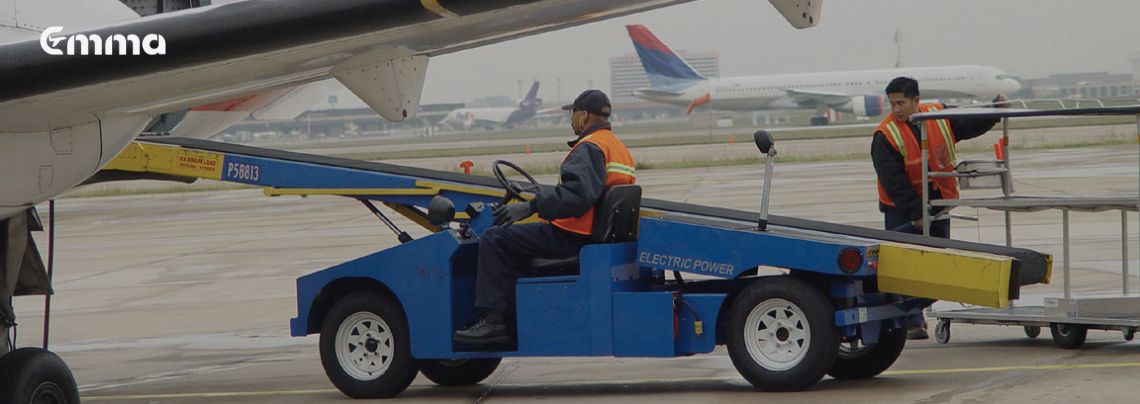
On the airside, the system’s role shifts from passenger experience to operational precision. Turnaround performance is a major driver of punctuality and stand capacity. Many delays are caused by micro-inefficiencies that are invisible in traditional reporting: a chock placed three minutes late, a belt loader positioned after the scheduled connection time, a cleaning crew still on board when boarding should have started.
AI video intelligence makes stand operations objectively measurable for the first time. It captures turnaround milestones from observation, not from system inputs that require someone to click a button:
- Chocks on and off
- Ground power connected
- Steps and jetbridge positioned
- Fuelling start and end
- Catering, cleaning, and waste service timestamps
- Boarding start, boarding complete, and pushback readiness
This creates a performance record that can be compared across flights, stands, ground handlers, aircraft types, and operating conditions. The question it answers is not just whether a turnaround was late, but precisely where in the sequence the time was lost, and whether the cause was resource shortage, process ambiguity, or coordination failure.
These are very different problems with very different solutions. Without observational data, the distinction cannot be made reliably.
The Technology Has Matured
Early video analytics deployments more than a decade ago created limited transparency in specific process areas. The current generation is architecturally different in three ways that matter operationally.
- Video is analysed on-site rather than transmitted to the cloud. Latency is measured in seconds, not minutes. Bandwidth requirements and cloud dependencies are dramatically reduced.: Edge processing
- Operators do not interact with dashboards and filters. They ask questions. ‘How long was the average wait at check-in Zone C between 09:00 and 11:00 yesterday, and what caused the spike at 10:20?’ The system answers in plain language, with the relevant video clip attached. Hours of manual CCTV review replaced by sub-minute retrieval.: Natural language interface
- This intelligence becomes significantly more powerful when combined with the operational systems that act on it. An alert that a security lane is degrading has one value in isolation. Connected to the A-CDM platform, it triggers a downstream review of predicted TSAT impacts for flights in the next 45 minutes. Connected to the RMS, it informs gate allocation sequencing. The data loop closes.: System integration
The systems where AI video integration multiplies value include AODB and A-CDM platforms, resource management systems, flight schedule and disruption management tools, passenger information systems, and staff planning platforms.
What This Does Not Do
This approach does not use facial recognition. It does not track individuals by identity. It does not build passenger profiles or share data with third parties.
It observes behaviour and flow at the aggregate and event level. This is precisely what makes it powerful, and precisely what keeps it on the right side of every privacy regulation globally, including GDPR, the PDPD frameworks across the Middle East, and equivalent regimes in North America and Asia-Pacific.
A Practical Path to Deployment
The airports that extract the most value from video intelligence are not those with the largest camera estates. They are those with the clearest operational questions. The deployment approach reflects this.
- Define operational KPIs explicitly. Not ‘improve security performance’. ‘Security wait time P95 under 10 minutes’. ‘Turnaround critical path milestones completed within SLA’. ‘Queue length never exceeds X passengers at check-in Zone B’. The specificity of the target determines the usefulness of the measurement.
- Pilot where the problem is clearest. One passenger process bottleneck, typically security. One turnaround milestone chain on a defined set of stands. Prove value with a clean baseline versus post-implementation comparison before scaling.
- Deploy for intervention, not reporting. Dashboards that arrive in the morning tell you what went wrong last night. Alerts that arrive during the shift enable a response before the impact reaches the passenger. The objective is to move from measurement to action.
- Build the improvement loop. Weekly performance reviews. Root cause analysis against observed data. Process updates and retraining where the data identifies the gap. Feedback into planning and forecasting. The tool creates visibility; the loop creates improvement.
- Quantify the full financial and operational impact. Resource utilisation improvement. Passenger satisfaction uplift. Reduced disruption cost. Capacity increase without infrastructure expansion. Improved SLA compliance with ground handling partners. The case closes itself when the numbers are measured, not estimated.
The Airports That Move First
Video intelligence of this kind has a compounding return. An airport that has 12 months of observed turnaround data knows things about its ground handlers and its stand configurations that its competitors simply do not know. An airport with a calibrated retail flow model can sell its advertising inventory at premium rates because it can prove eyes-on time, not just footfall.
Predictability has a direct capacity value. When variance is reduced and the causes of delay are understood, buffers can be tightened and throughput increases without a single additional square metre of terminal space.
The infrastructure is already there. Most airports already have the camera coverage this requires. What has been missing is the intelligence layer that turns those cameras from a passive archive into an operational asset.
That layer now exists.
EMMA Systems builds intelligent airport operations platforms. Our AI video intelligence layer is deployable on existing camera infrastructure with no new hardware required.
To discuss a deployment or pilot, contact us at info@emma.aero